Saturday, 10 August 2013

Glasgow part one: Field of Blood.


The best 'Glasgow noir' books are, in my humble opinion: William McIlvanney's The Papers of Tony Veitch (just shading the same author's Laidlaw). Louise Welsh's The Cutting Room, and Frederic Lindsay's Brond. Only the last has been televised, and in an absolutely superb version directed by Michael Caton-Jones in the mid-1980s. There's a brief and not very dramatic clip on YouTube. 

But over the past few weeks I've found myself walking on the noir side of Glasgow courtesy of more recent tomes. And, having just returned to the Zetlandics after a brief sojourn back in my home city, watching BBC Scotland's Field of Blood took me back once more to the mean streets of the Dear Green Place.

Field of Blood was an odd experience. Its first outing (why are the BBC commissioning these compressed two-parters? The lamentable Shetland was another piece of televisual booksqueezing) passed me by completely, and for whatever reason I'd failed to realise it was set not just in Glasgow, but in the world of Glasgow newspapers in the 1980s. Not unfamiliar territory for me. The central character, Paddy Meehan, originates in the books of Denise Mina, of which I've read just the one, her first, Garnethill. I enjoyed it but never read anything else by her, and I'm not sure why. I've interviewed her for radio about music, and she was an absolute delight. But like Val McDermid and Alex Gray - I've read one novel each by them, too - the world of her prose was a place to which I didn't want to return.

Anyway, Field of Blood. I caught a trailer which was jaw-droppingly bizarre. It was like River City meets Life on Mars. Ford Kiernan! David Hayman! And, for goodness' sake, the great David Morrissey. All in the murky half-light of miner's strike Glasgow newsrooms, clubs and back alleys. I iPlayered the first episode and after wrestling with the self-consciously 'banteresque' dialogue at first, I began to enjoy it.

The plot was nonsensically, at times hilariously derivative, an amalgam of Bleasdale's GBH, the original State of Play (also featuring Morrissey) and (choose any episode) Taggart. But the look of the show was great, owing much to the TV adaptation of David Peace's Red Riding Quartet (featuring, ahem, David Morrissey) and the aforementioned Life on Mars (Season two, the Audi years). The cars were just about perfect (Citroen CX! Austin Princess 'Wedge'! Rover SD1!) and there was fastidious attention to detail in set design, from the Tunnock's Teacakes and early Macintosh computers to the ties, lapels and moustaches. The newsroom, though, was way too small.

There was a cartoonish element to the acting, but some of it was leeringly great, especially David Hayman as McDade, the miner's union boss. Katherine Kelley was marvellously OTT as the Armani-clad Rebecca Brooks from hell, and Morrissey reliably wide-lapelled. Ford Kiernan was all snappy one-liners hiding his  Great Inner Heartache and Vulnerability, but I warmed to his tanktops too.

Interestingly, this was written and directed by David Kane, who scripted the dismal pilot for (inexplicably recommissioned) Shetland. He's obviously far more at home on the mean streets of 80s Glasgow and in the sarcastic bastardin' verbals of the city too. The lack of time to develop character and foreboding, as in the magnificently sprawling Broadchurch, is a problem. But the seductive setting and full-on acting kind of compensate.

I liked it. In the end, it was no Red Riding or Shadow Line, and certainly no Brond, which was a strange, at times distressing and always disturbing take on the nature of evil-in-Glasgow, actually made in the era Field of Blood was set in, and paralleling its political plot in some ways. It isn't available to watch these days, though Lindsay's book, and its terrifying sequel Jill Rips (made into a movie starring, wait for it, Dolph Lundgren) are deservedly still in print.

Right, that's enough. I'll talk in due course about my other Glaswegian adventures, courtesy of Liam McIlvanney (son of) and Malcolm Mackay. But for now, have a look at Field of Blood on iPlayer while it's still available.

Wednesday, 3 July 2013

A Whisky in Monsterville


Tom Morton,author of this book, is, to be open and fair, the other contributor to Thrillfilter. He did not write this review


I HAVE a considerable experience of Loch Ness and environs, and although Tom Morton in A Whisky in Monsterville exaggerates the area's essential weirdness and overall eccentricity, he only does so to a certain extent. The dangerous nature of the road up the north side, he exaggerates not at all. I can personally vouch for dangerous overtaking on the way back from many a Crofters Commission hearing, at the wheel of many an unfamiliar self drive. You know the definition of a self drive? It's a car which can go places your own never could.

Hippies settled in the environs of the loch from the sixties and on. And long before that, people who would have been called drop outs, had the term been invented. Aleister Crowley was just the most famous dafty with piercing eyes.

We already met Morton's hero, Murricane in previous novel, Serpentine. He is special forces, and vastly experienced in situations involving mayhem. But good hearted, and endlessly,hoping for a quiet life. Such a life is not available, and you have to wonder if he really wants it. 

In any event it certainly isn't available to a man of principal who finds himself in a situation involving a loathsome American evangelist with creationism on his mind, a truly terrifying psycopath called,Jenks with appropriate, tidy, killing, and collecting on his, and his employer, an American billionaire, with a mind like a sewer, and a desire for some precious rare earths, which are under Loch Ness.

Not to mention a great deal of whisky, where Murricane, like the author himself, is an expert. In fact, each chapter of the book has an accompanying whisky or whiskey. As to what drinking them, chapter by chapter would be like, I can't help you to a view. Whisky, as understood today, was not invented when I quit the booze, 20 years ago.

It looks like pretty good stuff, but in my day, the whisky strap line was "Burny. Makes you drunk". Which was good enough for us, though we really preferred very treacly rum. We were, you understand, just one generation away from merchant seamen, and learned our drinking from them.

However, getting back from the highways and byways of sentimental reminisce, A Whisky in Monsterville. How does it rate. Highly, I think.

Unlike many of those who tread the best seller trail, Tom Morton is genuinely erudite, with an enviable breadth of knowledge covering music, literature, and a lot more of what makes  life worth living so all sorts of stuff crops up to lighten and enliven the narrative. To put it another way, the skeleton of the narrative is fairly standard. How could it be otherwise?

That narrative carries you professionally along. But meanwhile the book holds you in a way most in the genre don't, through well drawn characters, humour, and yes, erudition.  


Friday, 31 May 2013

The brilliance, appetite and humanity of Inspector Montalbano


Camilleri could be perhaps described best as a maker of artefacts. Especially fine ones, which make you smile and smile.

Inspector Montalbano is really something. Humane, clever, tolerant up to a point, which of course, you would have to be to be a Sicilian police officer. And hilarious. He is also, throughout many volumes, the lover of the superb Livia, from Genoa. From where, as  I seem to recall Christopher Columbus hailed.

A serious gourmet, he maintains relationships of mutual respect with a selection of wonderful cooks. In parenthesis, here, Sicily may well be home to the finest food in Italy. A risky thing to say, but I recall a Tuscan friend of mine saying that in Tuscany, they had peasant food, but here in Sicily, ah! King's food.

In The Scent of the Night, Montalbano sets out to track out the sponsor of a Ponzi scheme, who has done the necessary runner with all clients money. Or so it appears to everybody, even to the Inspector, for a fair segment of the book. Camilerri does not write long novels, just wonderfully crafted ones.
A clue here as to why it turns out he hasn't. A spoiler I am afraid, for Faulkner aficionados. The Scent of the Night openly cites William Faulkner's great story  A Rose for Emily.

Naturally, Fazio, whose loyalty to Montalbano is absolute, and which loyalty, in an uncharacteristic twist for the genre, is completely supported by Fazio's excellent wife, plays his part, entirely unmoved if the Inspector has to do something slightly illegal to do the right thing. Likewise Cateralla, whose grasp of language is tangential, and who passes on more and more absurd excuses for Montalbano's absence to the Commissioner.


This is number six in a series of Montalbano novels which reached its 20th in 2012, when Camilerri reached the age of 87. Apparently while also being a lifelong, heavy smoker. 

When you want something immaculate to cleanse the pallet, if you enjoy your perfection with humour and solid morality, reach for one of these books.   

Drew Ratter

NOTE: Camilleri chose the name Montalbano as a tribute to his friend and fellow Marxist crimewriter/gourmand, the Catalonian Manuel Vazquez Montalban

My sacrifice: I read this so you don't have to


I thought I should read this because it is to be filmed, and we Shetlanders are endlessly fascinated by portrayals of our archipelago. Some of us - though not me - because, of course, every writer makes errors, whether in language or geography, and some of us - not me - cannot bear it, fascinated and indignant concerning bloopers.

Me, I like  ingenious plotting, great characters, and splendid writing. For contrast, take the recent dramatisation of Shetland, from Ann Cleeves, and STV's Broadchurch. The former had terrible plotting, hopeless characters, and dismal writing. It also did a complex round of the islands, regularly and inconsistently, to get from the north end of Bressay to the ferry. Which would not have mattered at all. If not for the aforementioned plotting, characters, writing etc.

Broadchurch was not adapted from a novel, had one principal writer, and gripped from beginning to end. It was great, with excellent actors as well. 

So. You will note that I have got this far in without really making much of SJ Bolton's Sacrifice at all. So 
no sacrifices by me so far.  But it won't do. It is truly terrible. A small but telling detail. What, for God's sake is a "soft, sweet, eastcoast accent"? One such is possessed by a WPC, where it proves that she doesn't come 
from Shetland? Peterhead? Peterheid?

Anyway. Women are dug from the peat. They might be ancient, due to the  curative properties of the moor. But as it turns out, they aren't. It's all about a sort of Shetlandic sub-species of trow. Full sized, and very clever, and born out of women who get sacrificed (hence the title), and a massive conspiracy which manages to include pretty well the whole workforce at the local hospital, and so on.

I think that covers it, though I was speedreading towards the end. Well, after, say, page 23. 

I have read it (well,sort of) so you don't have to. And because I can't really be bothered with 
the supernatural, I probably won't trouble with the movie. Or definitely.

Drew Ratter

Wednesday, 22 May 2013

Hacks, heroes and hopefully avoiding legal action: the journalist as novelist and protagonist

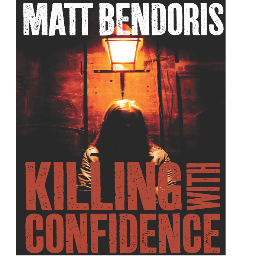
Anyone who has ever been involved with the Scottish newspaper industry should undoubtedly beg, borrow, steal or otherwise obtain a copy of Matt Bendoris's first novel Killing with Confidence. I can promise that they will read it with tremendous enjoyment.

Unless - or maybe especially if -  they happen, lightly or heavily disguised, to be in it.

And striding colourfully through the book they may imagine they can identify more than the models for Bendoris's array of  hacks, former editors, editors, news editors, editorial secretaries, union reps and human resources managers. Cops, therapists, celebrities, businessmen and women, gangsters and restaurateurs - the full panoply of West Central Scotland tabloidism is here, some individuals more recognisable than others.

I trust that Bendoris's nose for a 'legal' - he is chief features writer for the Scottish Sun - will keep him out of trouble in the courts over this highly entertaining book - I certainly hope so. Some of the 'originals' are dead and as for others, well. I will say nothing more, other than I expect a few tweaks before the paperback version comes out in the summer. That's the great thing about Kindle releases: the editing process can be continuous.

There are some brilliant tropes in what is often reminiscent of Colin Bateman's early Ulster black farces (before he became just 'Bateman' and too easily confused with the protagonist of American Psycho): The serial killer Osiris, fuelled by American self-help CDs. The Jekyll and Hyde detective with Tourette's. The hilarious central character April Lavender and the Bendoris stand-in Connor 'Elvis' Presley.

 It feels slightly unfinished - the ending is rushed and the sense of scores being settled may be a little too strong for some. It's perhaps a stringent edit and a couple of more drafts away from being properly done and dusted. But as it stands, it's a great read, and less than three quid on your Kindle.

There are some great illustrations of pre- (and probably post-) Leveson tabloid tactics, and probably the best swearing and deep-fried food consumption I have experienced outside of John Niven's  wonderful The Amateurs.

Just beware, though if you have a Paperwhite: My version loaded the book to start four chapters from the end. Which kind of spoilt the whodunnit element when I finally realised and started at the beginning...